Communicating Edge-of-Field Practices: Turning Awareness into Action
The Illinois Conservation On-Farm Network (ICON) hosted Dr. Jacqueline Comito from Iowa State University and Scott James from the U.S. Fish and Wildlife Service for the final webinar of 2025. Guest speakers shared research and practical tips for effectively communicating about edge-of-field (EoF) practices.
Edge of Field Practices – Essential, but Under-utilized
Across Illinois and the Upper Mississippi River Basin, EoF practices – especially those those that capture and treat tile drainage water such as saturated buffers, constructed wetlands, and bioreactors – are critical tools for improving water quality and reducing nutrient runoff. Yet adoption remains strikingly low: less than 1% of Illinois farmland currently uses these practices.
What is the primary barrier? Research from Iowa State University points to a lack of awareness. Many farmers are unfamiliar with EoF practices, often confusing similarly named options like buffers versus saturated buffers. Others don’t realize how vital these practices are for reducing nitrogen loss from tile-drained fields. This knowledge gap underscores the urgent need for clear, accessible education that explains what EoF practices are, how they work, and why they matter.
The Messenger Effect
During the webinar, Comito presented findings from a 2025 study “How to Increase Iowa Farmers’ and Landowners’ Understanding of Edge of Field Practices” (Wan et al. 2025). The research revealed that eye-catching outreach materials, credible messengers, and messages highlighting wildlife benefits all increase willingness to adopt EoF practices.
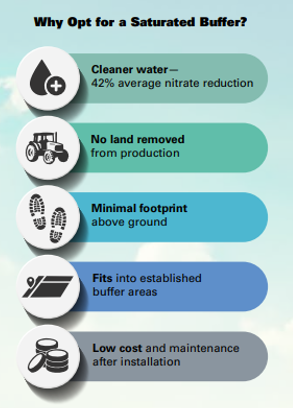
Excerpt from an infographic-style fact sheet on saturated buffers from Iowa Learning Farms. View the full Edge of Field Infographic Series.
- Infographic-style fact sheets were the most effective format for sharing information, outperforming longer, text-heavy communications.
- Peer-to-peer messaging matters. Farmers preferred hearing about EoF practices from other farmers. Videos featuring farmers – especially those emphasizing wildlife benefits – were strongly associated with higher willingness to adopt.
- Gender influences response. A video featuring a female farmer discussing wildlife benefits significantly boosted adoption willingness compared to nutrient-focused messaging alone. For female landowners—a growing demographic—these messages resonated even more, highlighting an opportunity for targeted outreach.
A Challenge to Conservation Professionals
Both speakers emphasized the pivotal role conservation professionals play in bridging the EoF knowledge gap and accelerating adoption. Dr. Comito shared “Keys to Success” for effective outreach:
- Clarify differences among practices. Be prepared to explain benefits for water quality and wildlife and distinguish between similar-sounding practices.
- Set realistic expectations. Clearly describe installation steps and costs to reduce perceived complexity.
- Stay positive about programs. Avoid negative commentary on requirements or administrative processes; instead, provide excellent communication and customer service to guide landowners through the process.
Scott James reinforced these recommendations, drawing on his experience delivering the Partners for Fish and Wildlife Program in northwest Illinois and northeast Iowa. He stressed that clear, consistent communication and exceptional customer service are essential for successful conservation delivery. Taking time to understand landowner objectives, leveraging all available resources, and remaining engaged throughout the process – including advising on long-term management – can ensure project success and often lead to additional future projects.
In 2026, ISAP’s edge-of-field working group looks forward to applying insights from this ICON webinar to expand adoption across Illinois. Expanding adoption of EoF practices will require more than technical solutions. We need clear communication, trusted messengers, and a focus on landowner priorities. Together, we can turn awareness into action and make measurable progress toward healthier watersheds.
