
The Soil Health Leadership Program helps farmers, retailers, crop advisors, and conservation professionals improve their understanding of soil health principles and the production management changes needed to maximize on-farm benefits of soil health systems. Over the course of 18 months, participants study soil structure and function, selection, seeding techniques, and termination methods for cover crop management, and communication and outreach strategies. Upon graduation, participants earn the title of Soil Health Ambassadors.
Soil Health Ambassadors are encouraged to expand the impact of their learnings by hosting field days and educational sessions for farmers and other local practitioners as well as working with farmers one-on-one to provide technical assistance. A recent survey of SHLP graduates highlights the training’s impact beyond the classroom and continued momentum in adopting and sharing sustainable soil health management systems. Since participating in the program, nearly 90% of participants have shared training content directly with farmers in their networks and almost half of respondents engaged more than 50 people in their outreach efforts.
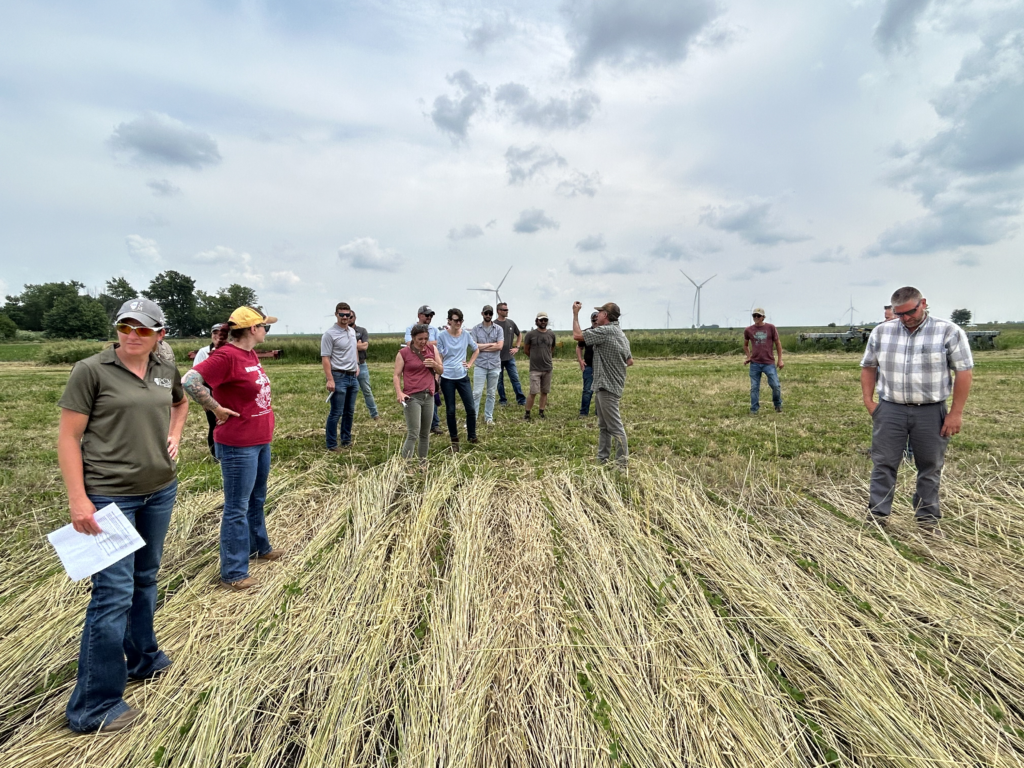
SHLP participants observe roller crimping of cereal rye on research fields managed by Joel Gruver at Western Illinois University.
Soil Health Ambassadors’ outreach efforts have not only reached hundreds of people across the state but have also been translated into on-the-ground change. Nearly three-quarters of respondents reported influencing management decisions on more than 500 acres with a quarter influencing more than 10,000 acres. Ambassadors have expanded cover crop acreage and species, deepened connections with local agricultural educators, and incorporated elements of the training into their own programming for farmers and their communities.
All respondents indicated a desire to continue their engagement with classmates, farmers, and others on soil health activities. Half of participants were very interested in staying involved and another 31% were willing to facilitate future events and discussions. Many wish to continue their education beyond the program and identified a need to learn more about developing practical resources for producers and strengthening peer relationships as they move forward in their soil health work.
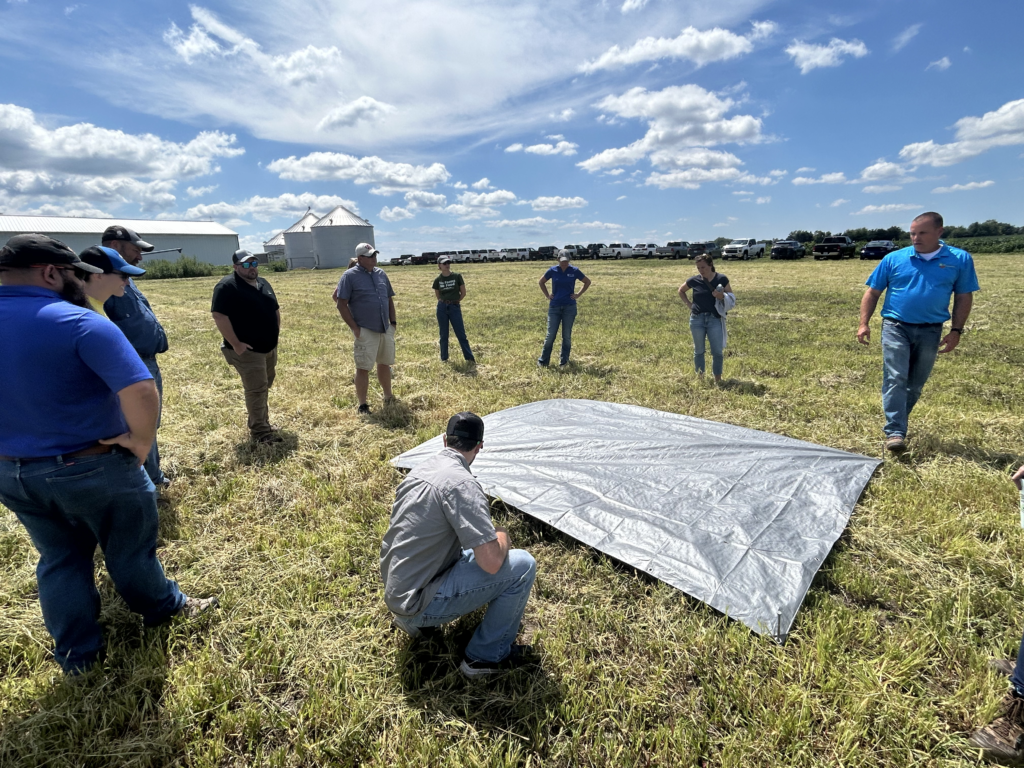
ISAP’s Soil Health Specialist, Jim Isermann, demonstrates cover crop seeding distributions after a drone demonstration on Brad Zimmerman’s farm in Tazewell County, Illinois.
Ambassadors are well-positioned to continue leading conversations on soil health practices with farmers. More than 44% report confidence discussing tillage management and cover crops with their networks, a core outcome of the program. Most prefer one-on-one and small group, on-farm consulting approaches for farmer engagement. While modest stipends for their work were viewed as appropriate, participants consistently emphasized the value of their time, underscoring both the commitment they bring to this work and the hard-earned lessons that drive their leadership. Graduates of the Soil Health Leadership Program are valuable resources for the Illinois agriculture community who seek to keep momentum going for improving stewardship across the state. Get in touch with past graduates by visiting ISAP’s Conservation Story Map and searching for ISAP Training Graduate.
You Can Participate
Support the 2026-2027 Soil Health Leadership Program by sponsoring a training session
Learn more about the program and become a Soil Health Ambassador
